After much consultation and weighing the pros and cons, you and your dental team have determined that a dental implant is the best solution for your missing tooth (or teeth). Congratulations!
Soon after, your periodontist mentions your jawbone may need a little prep work before moving forward with the dental implant. This isn’t unusual—especially if the tooth has been missing for a while.
Think of it this way: When building a house, before anyone frames a single wall, the foundation has to be solid. Your jawbone is the foundation for an implant. And after tooth loss, that foundation can shrink.
Ridge augmentation rebuilds that foundation.
If you’re considering ridge augmentation for dental implants in Hattiesburg, Mississippi, here’s what the procedure is, why it’s done, and what recovery looks like.
At Pine Belt Periodontics, we handle every stage of the implant journey—from rebuilding the foundation to placing the finished tooth.
What Is Ridge Augmentation?
Ridge augmentation is a bone grafting procedure that rebuilds the height or width of the jawbone ridge where teeth are missing. By adding bone where it has worn away, it creates a strong, stable foundation. That way, the dental implant can be placed securely.
The “ridge” in question is the alveolar ridge. That’s the arch of bone that holds your teeth in place. If you run your tongue along your gums, you can feel it.
Jawbone ridge augmentation is one of several bone augmentation procedures periodontists use to prepare for implants. Its close cousin, the sinus lift, adds bone specifically in the upper back jaw, under the sinuses. The goal is the same—the difference is the location.
Why Is Ridge Augmentation Done Before Implants?
Not everyone needs ridge augmentation before getting implants. It’s recommended only if the jawbone has become too thin or too short to securely hold the implant in place. Unfortunately, this is common after tooth loss, years of wearing dentures, an injury to the mouth, or gum disease.
You see, your jawbone follows a “use it or lose it” rule. Every time you chew, the roots of your teeth stimulate the bone. But if there’s no longer a tooth, that stimulation goes away. And since it’s no longer needed, the body begins to reabsorb the bone.
Research has found this ridge can lose roughly half its width in the first year after an extraction—with much of that bone loss happening in the first few months.
Some of the reasons the ridge shrinks include:
- A tooth extraction wasn’t followed by grafting (aka socket preservation)
- Periodontal disease (i.e., gum disease) infection destroys the bone around the teeth
- Long-term denture wear, which puts pressure on the ridge but doesn’t stimulate the bone
- Injury, infection, or a tooth that has been missing for a long time
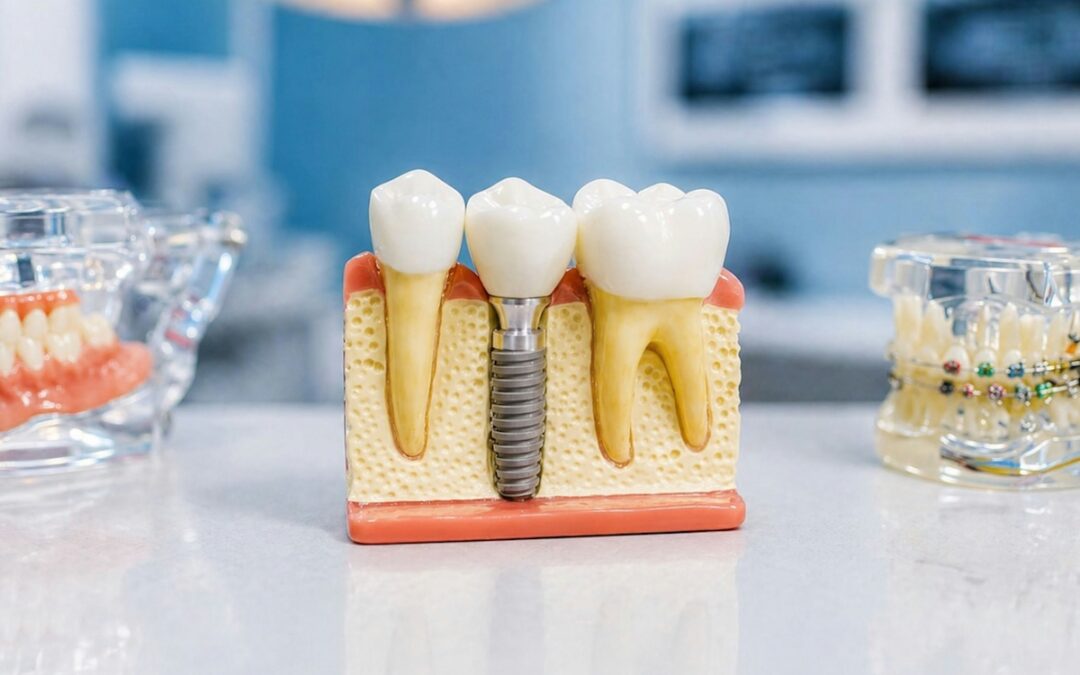
The strength of the foundation (the jawbone) is vital, as an implant is a small titanium post that fuses with your jawbone, much like a natural tooth does. It needs the bone on all sides to stay stable and secure for years to come. If, on the other hand, there isn’t enough bone, the implant may not fully integrate, increasing the risk that it may fail over time or sit at an awkward, unnatural-looking angle along the gumline.
Before recommending bone augmentation for implants, our Hattiesburg team evaluates your bone volume with a thorough exam and imaging.
The Ridge Augmentation Procedure
Many patients are surprised to learn ridge augmentation is actually a routine in-office procedure for a periodontist. It typically involves:
Consultation and imaging: We start with your health history and then examine the area and measure how much bone is available before discussing options and setting an appointment to get started.
Get comfortable: Before we begin the procedure, the area is numbed with local anesthesia. For folks who feel anxious, IV sedation is available. Dr. Pitfield is IV sedation certified, so you can relax completely while we get the job done.
Revealing the ridge: A small incision in the gum exposes the bone.
Placing the graft: Where the ridge needs more height or width, bone graft material is placed.
Protecting the site: A thin membrane is often placed over the graft just to hold it in place as the new bone forms.
Closing up: The gum is repositioned and sutured shut.
Rest and recovery: You head home with clear care instructions, so your body can do its thing and heal.
Follow-up: We’ll set up a time for you to come back, so we can ensure the area is healing well.
What Is the Graft Made of?
Graft material can come from different sources, including your own bone (autograft), donor bone from a tissue bank (allograft), animal-derived bone (xenograft), or a synthetic material.
No matter which source is used, it acts as a scaffold. Your bone grows its own new bone over time. (The body’s ability to heal is truly miraculous.) Some practices also add platelet-rich fibrin (PRF), made from a small sample of your own blood to help support the healing process.
When Does the Implant Go In?
In some cases, the graft and implant can be placed in the same visit. More often, though, the graft needs time to heal and mature, and that usually takes several months before the implant can go in.
Waiting is rarely anyone’s favorite thing to do. But giving the bone time to solidify helps the implant last not just for years but for decades.
Having a Tooth Removed?
If you haven’t yet lost the tooth and are instead facing an extraction, placing graft material into the empty socket when the tooth is removed can prevent much of the bone loss before it starts. Known as socket preservation, this is one of the simplest ways to make future implant placement easier.
Recovery After Ridge Augmentation for Dental Implants in Hattiesburg, Mississippi
For most patients, the recovery is very manageable. Some swelling and possible mild bruising may occur in the first few days, but most patients report minimal discomfort.
For a smoother recovery:
- Use ice (a cold pack on your cheek, 20 minutes on, 20 off) for the first day or two
- Take medications (pain relievers and antibiotics) as prescribed
- Stick to soft foods (such as yogurt, scrambled eggs, mashed potatoes, or smoothies) for a bit
- Chew on the other side of the mouth to give the graft site a break
- Avoid smoking and straws, as the suction can disturb the graft and slow healing
- And keep your hands—and tongue—away from the site to give it a chance to heal.
You’ll return for follow-up visits to not only remove any stitches (if needed) but to ensure the tissues are healing well.
The most important job, however, is letting your body heal and build new bone over the next several months.
Why Choose a Periodontist for Ridge Augmentation in Hattiesburg?
When it comes to dental care, we know you have choices between dentists and periodontists. At Pine Belt, bone grafting and dental implant placement are core parts of what we do. Dr. Pitfield earned his Certificate in Periodontics from Baylor College of Dentistry and has cared for Hattiesburg patients for more than 33 years.
At Pine Belt Periodontics, your evaluation, extractions, ridge augmentation, implant placement, and long-term gum care all happen under one roof, with one team who knows you and your history. No bouncing around between offices.
Ridge Augmentation FAQ
Does ridge augmentation hurt?
Thanks to local anesthesia and optional IV sedation, the procedure itself shouldn’t hurt at all. Afterward, most patients describe soreness similar to a tooth extraction. This is usually well-controlled with ice and medication used as directed.
How long after ridge augmentation can I get an implant?
It really depends on the size of the graft and how your body heals. Many patients are ready for implant placement within about four to six months. Larger grafts, however, may need longer. Readiness isn’t determined by a set timeline but rather by a thorough exam and imaging.
Is ridge augmentation the same as a bone graft?
Ridge augmentation is a type of bone graft, specifically to rebuild the jawbone ridge where teeth are missing.
What happens if I skip ridge augmentation?
If your bone is too thin or too short, an implant may not be stable, may fail over time, or may just not look natural. And in some cases, implant placement simply isn’t possible without it.
Can I avoid needing ridge augmentation later?
If you’re having a tooth extracted, ask about socket preservation. Grafting at the time of extraction can help protect your ridge and keep future implant options open.
Build a Strong Foundation for Your New Smile
If you’ve been told you don’t have enough bone for implants, don’t give up. Ridge augmentation may be the step that makes them possible.
Call Pine Belt Periodontics at (601) 264-2424 or tap here to schedule your implant consultation in Hattiesburg.